

Charge to Deacons Bob Stillerman Thirteenth Sunday After Pentecost, 8/23/2026 Matthew 16:13-20 Bulletin | 2026 Deacon Installation Insert | Charge to Deacons Today, we have the great privilege to ordain Rev. Becky Albritton into deacon ministry, and to install Ron Alford, Ellen Hinton, Cher Moss, and Jane Pearce as collaborators in the journey. Now it […]

Nevertheless, She Persisted
Long ago, a faithful woman insisted that God was big enough and bold enough to heal the world, her neighborhood included. And so she persisted. May God give us the courage to do the same.
Seeing More Than Ghosts
Jesus meets us in the wilderness. Jesus walks toward us, right over choppy waters, to join us in the storm. Jesus offers a hand, even rescues us from drowning. Jesus offers the same love and consistency to the doubters, and the worriers, and the grumblers as he does to the confident, and the faithful, and the content.

Take It and Break It
God has always, and will always, provide us with enough. We don’t need to read today’s text to know that truth. But today’s text reminds us that it’s not Caesar who originates nor facilitates the resources to meet our needs. It’s God. And God alone. That means the world we must strive for, the world we can live into, is steeped in cooperation: the acknowledgement that ours is a world where God’s people and God’s lands operate in accordance with God’s good nature and God’s good character. God empowers us to feed one another; God invites us to be full rather than stuffed; God transforms the ordinary and the meager into the extraordinary and the abundant.

Job Opening: Administrative Assistant
Administrative Assistant Overview: Millbrook Baptist Church is celebrating our 150th year of ministry in North Raleigh. We strive to be a community of effusive welcome, one that meets people where they are right now. We are seeking an Administrative Assistant who will be an integral part of our hospitality. This person will be the face […]
Millbrook Coloring Books
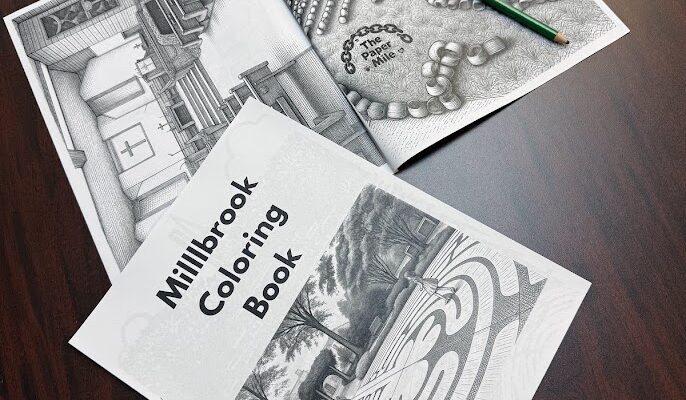
For all the coloring enthusiasts young and old, we are pleased to introduce the Millbrook coloring book. Printed copies are available in the vestibule. An electronic version is below. Enjoy! MBC Coloring Book