
It’s a Parable, Silly
Bob Stillerman
24th Sunday After Pentecost, Matthew 25:1-13
11-8-2026
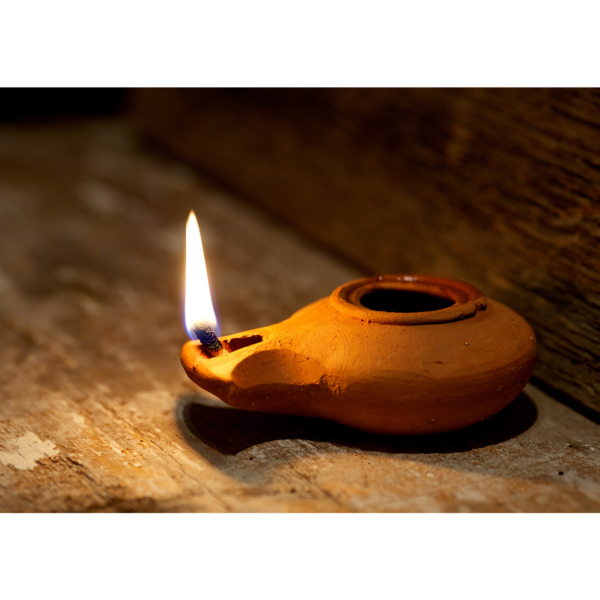
Mathew 25:1-13
25:1 “Then the kingdom of heaven will be like this. Ten young women took their lamps and went to meet the bridegroom.
25:2 Five of them were foolish, and five were wise.
25:3 When the foolish took their lamps, they took no oil with them,
25:4 but the wise took flasks of oil with their lamps.
25:5 As the bridegroom was delayed, all of them became drowsy and slept.
25:6 But at midnight there was a shout, ‘Look! Here is the bridegroom! Come out to meet him.’
25:7 Then all those young women got up and trimmed their lamps.
25:8 The foolish said to the wise, ‘Give us some of your oil, for our lamps are going out.’
25:9 But the wise replied, ‘No! there will not be enough for you and for us; you had better go to the dealers and buy some for yourselves.’
25:10 And while they went to buy it, the bridegroom came, and those who were ready went with him into the wedding banquet, and the door was shut.
25:11 Later the other young women came also, saying, ‘Lord, lord, open to us.’
25:12 But he replied, ‘Truly I tell you, I do not know you.’
25:13 Keep awake, therefore, for you know neither the day nor the hour.
Sermon: It’s a Parable, Silly
You know the story.
There was gonna be a huge party: a wedding feast or celebration to rival the biggest soiree you can imagine. And the most handsome groom was gonna come calling on ten intelligent, capable women, who would bear torches, and help this young man welcome his bride like Arthur welcomed Guinevere.
But something happened; the bridegroom missed his Uber, or got detained finishing arrangements for the party, and he was delayed; so delayed that he didn’t arrive until well after midnight.
The text tells us that some of these women were more prepared than others. Five wise women brought extra lamp oil; five foolish women didn’t plan on needing additional supplies. The wise women were prepared, but not prepared beyond their own provisions, and they were unwilling to share with the others.
Therefore, the foolish women (I don’t like this characterization of foolish, and I’ll say more about that in a minute!) in need of provisions leave in the middle of the night to seek out a dealer of lamp oil. As luck would have it, the bridegroom arrives in their absence, and he invites the remaining five bridesmaids to come with him to the party. When the other five finally arrive from their errand, they find the party closed to them, and the bridegroom refuses to acknowledge their presence.
I want to submit to you this morning, that the way we choose to interpret today’s text, and others like it, has substantial ramifications for how we understand God, and our place in the world.
Traditional interpretations have taught us to hear this story as a kind of spiritual sorting exercise. Some people are ready. Some aren’t. Some get into the party. Some find the door closed.
And if that’s all this story is, our task is simple: when it’s all said and done, we just need to make sure we’re standing on the right side of the door.
But Jesus doesn’t just give us any story. He gives us a parable. And we ought to know by now that parables are rarely cooperative. Parables have a way of troubling the categories we devise. They ask us to see our neighbors, and sometimes ourselves, differently.
Remember the parable of the Good Samaritan? Martin Luther King Jr. imagined the priest and Levite asking, “If I stop on this abandoned road to help this man, what’s gonna happen to me?” The Samaritan reverses the question: “If I do not stop to help this man, what’s gonna happen to him?”
I wonder if Jesus is asking us to make the same turn.
The question isn’t: “What must we do to remain inside the door?”
The question becomes: “What must change so our neighbors can be here, too?”
That’s a different way to hear the story. And it makes me wonder whether the people we’ve been calling foolish might have something wise to teach us.
I mentioned my disdain for the word foolish, especially as a characterization of half our bridesmaids. But I’m also not a fan of wise. Foolish can also mean insignificant. And wise isn’t always an ideal adjective. Wise can mean crafty.
When I read this story as a parable, I’m not drawn to the wise women, because honestly, to me, they seem pretty crafty. They feel a lot more like scheming contestants on the Bachelor, than they do role models for faithful service. And my heart aches for the foolish women, because I believe what they are really being labeled as is insignificant. Not only are they ostracized by their peers, but they are rejected by their host. And what is their crime?
They didn’t bring enough provisions to an event where the host was too inconsiderate to be on time.
Millbrook, is it possible we’ve been asking the wrong questions?
Are we wise in a way that uses sound judgment?
Or are we wise in a way that allows someone else to be on the outside, so we can be on the inside?
The parable provokes us to see our neighbors in a new light:
Are our neighbors really that foolish?
Or have we deemed our neighbors insignificant, and therefore not valuable enough to share in our provisions?
When I read this parable, I don’t want to get distracted by talk of empty lamps and slamming doors. When I read this parable, I see Jesus asking us to remember that we, as God’s people, cannot be whole if we refuse to do the hard work of preparing a world where our neighbors can thrive, too.
This means we must ask more uncomfortable questions:
What prevents our neighbors from securing the things they need?
What role, intentionally or unintentionally, do we have in preventing our neighbors from accessing their needs?
Or, to return to our original question: What must change so our neighbors can be here, too?
I believe we can start to answer these questions by allowing this parable to provoke a new understanding of our neighbors:
Five women, the world called them foolish, arrived with minimum provisions.
Five more women, the world called them wise, arrived with surplus.
One foolish woman stood in line on election day for hours; she chose to vote rather than to earn her daily wage, and she could only afford one bottle of oil. Her wise counterpart lived in the suburbs, and she voted in fifteen minutes, and stopped by Walgreen’s on her lunch break.
One foolish woman took the bus; she had enough money for one bottle of oil, and one bus ticket; she thought it better to be prompt than to have extra oil. Her counterpart had a car, and a Costco membership, so she didn’t need to worry.
One foolish woman was young; this was the first feast she’d even been invited to, and she didn’t know the protocol; the wiser, more experienced woman beside her could have easily been a mentor, but there’s only so much joy to go around.
One foolish woman had the audacity to be from Samaria; she actually found a dealer of oil in the middle of the night, but he wouldn’t sell it to her kind; Her wise counterpart had the good sense to be born in a proper neighborhood, so she had her choice of vendors.
One foolish woman lived in an abusive household; her daddy threatened that she’d better make a good appearance at this party or else; she was too traumatized to think about packing extra oil. Her wise counterpart was smart enough to have a loving and supportive set of parents who reminded her to bring extra oil just in case.
Friends, the kingdom of heaven is not about being wise or foolish, prepared or unprepared. It’s about acknowledging the complete audacity, and the complete foolishness of believing that our value in the eyes of God is somehow connected to our earthly privilege.
Finally, it’s not lost on me that we read our parable on a Sunday following yet another contentious election cycle. And once again, oil has our attention.
Oil for our lamps.
Gas for our cars.
Election after election promises some new wave of change. And yet so often our appetite for change rises and falls with the price at the pump. We demand something different when our own provisions feel threatened.
Perhaps that’s exactly what our parable is trying to disrupt.
How much change have I created if my biggest concern is making sure there’s enough oil for my lamp?
How much change have you created if you’re safely inside, but your neighbor is still standing outside the door?
How much change have we created if there’s still not room for everybody at the party?
The question isn’t whether we have enough oil to stay at the party.
The question is the one we’ve been asking all along: What must change so our neighbors can be here, too?
God’s in-breaking realm is not content with simply inviting every bridesmaid to the party. God imagines a world where every bridesmaid can come through the door and be welcomed at the table. And where every bridesmaid is called by a name far more truthful than wise or foolish: Child of God.
Good friends, we have a world full of neighbors. May we help fill their lamps. And may we hold the door open.
May it be so. And may it be soon! Amen.